

Keywords
political satire
Augustinian politics
Utopia
political psychagogy
pride
The City of God
How to Cite
Abstract
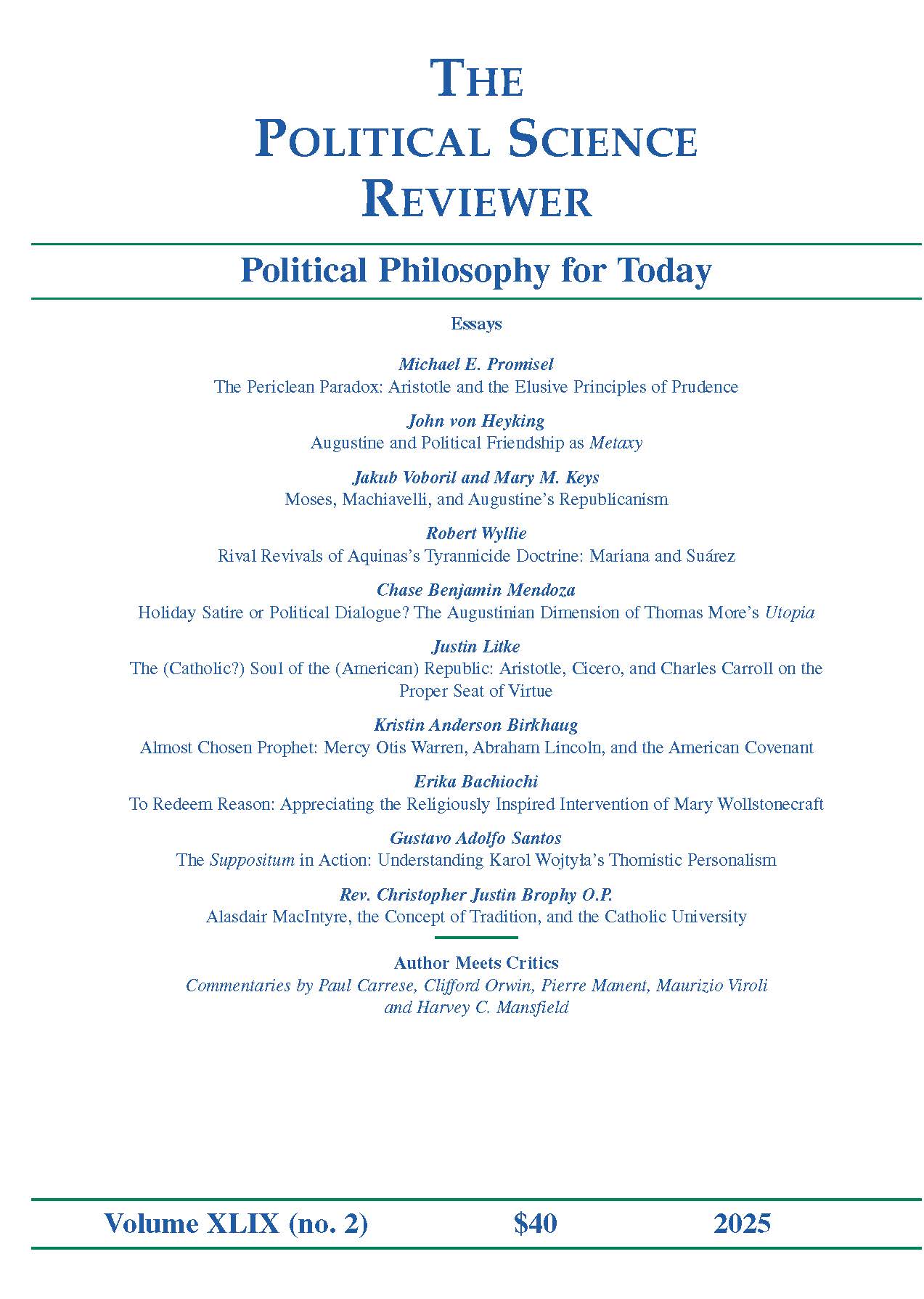
Scholars have gestured at the importance of the Augustinian dimension to Thomas More’s Utopia (De optimo reipublicae, 1516)since the early biographers of Thomas More recounted his renowned set of lectures on Augustine’s City of God (De civitate Dei) in the St. Lawrence parish church in London. This article works through the textual resonances in each text looking precisely at superbia to demonstrate how Thomas More engages in the project of educating the reader’s political imagination. The psychagogic effects of Utopia demonstrate More’s participation in an Augustinian tradition where politics plays a key role in securing temporal peace and ameliorating the politically vicious effects of pride. By pushing on the Augustinian dimension of Thomas More’s Utopia rooted in the tempering of political pride, one can affirm the satirical elements of the dialogue and its serious political proposals.